
Bespoke Indoor Swimming Pool Installation for Luxury Homes

Why indoor pools demand specialist installation
An indoor pool introduces complexity that outdoor installations simply do not carry.
The pool shell must be coordinated with the structural frame. Environmental control systems must manage humidity, condensation and air quality within a sealed or semi-sealed space. Plant rooms must be sized and positioned to serve the pool without compromising the architectural layout. Waterproofing must account for moisture migration through the building fabric, not just containment of the pool water itself.
Indoor pools also sit on the critical path of a construction programme. Structural allowances, service penetrations, duct routes and drainage strategies must be fixed early. If these decisions are deferred, the consequences are significant: structural clashes, escalating costs and programme delays that affect the entire project.
Structural coordination
Basement and under-build pools require careful structural planning. Slab thickness, loading calculations, tanking systems and crack control strategies must be agreed with the structural engineer at concept stage.
Environmental control and ventilation
Indoor pool halls generate substantial moisture. Without proper environmental control, condensation will damage finishes, structural elements and building services over time.
A well-designed indoor pool requires dehumidification, fresh air supply, heat recovery and careful management of air movement patterns across the pool hall.
These systems must be coordinated with the M&E engineer and structural team early in the design process. Duct routes, service zones and plant capacity all affect the building layout. Building Regulations Part F (ventilation) and Part L (energy performance) apply directly to indoor pool environments, and compliance must be designed in rather than resolved later.
Waterproofing and moisture management
Indoor pool waterproofing goes beyond the pool shell. Tanking systems, vapour barriers and drainage layers must protect the surrounding building fabric from moisture migration.
Walls, floors and ceilings adjacent to the pool hall require careful detailing to prevent long-term damage. In an indoor environment, the consequences of waterproofing failure are amplified because moisture has nowhere to escape naturally.
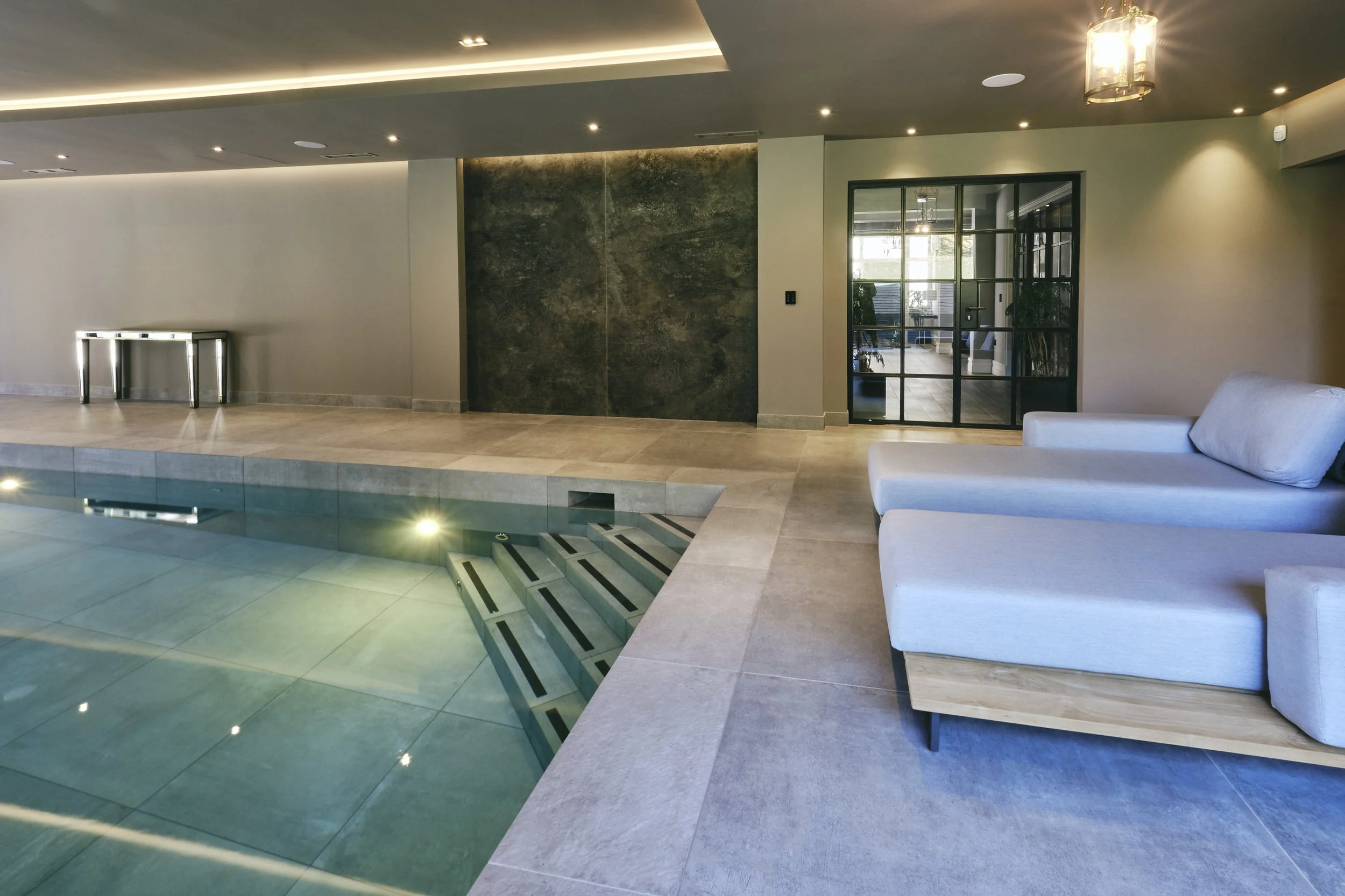
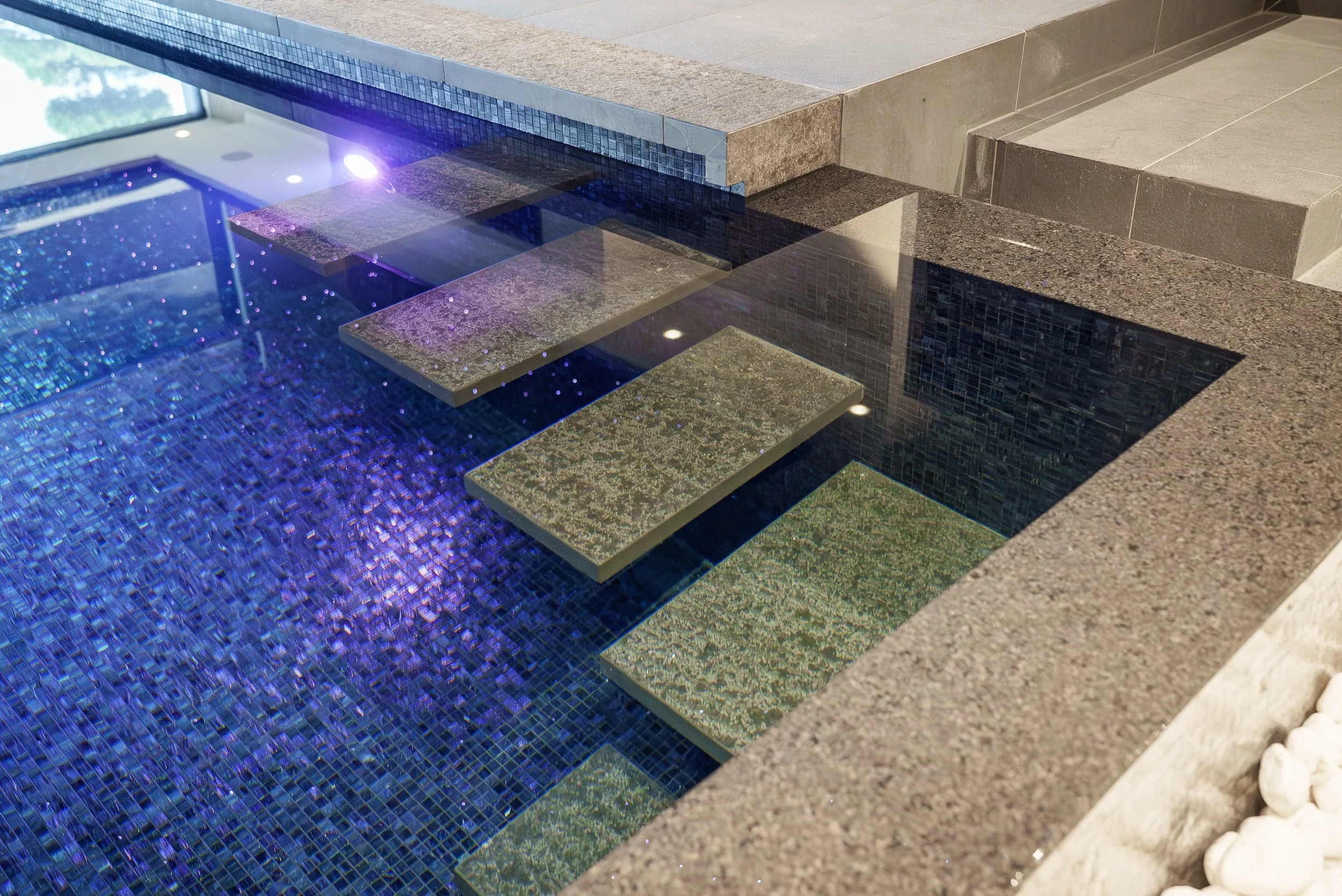
An indoor swimming pool is one of the most technically demanding elements of a luxury home
Unlike outdoor installations, an indoor pool is a structural, mechanical and environmental component of the building itself. It must be engineered into the architecture from the outset, coordinated across multiple disciplines and delivered with precision to ensure decades of reliable performance.
For architects, developers and high-net-worth homeowners working on premium residential projects, the success of an indoor pool depends entirely on the quality of planning, specialist input and technical execution behind it.
CSPAS is an award-winning pool and wellness specialist based in Cheshire, with over two decades of experience delivering bespoke indoor pool environments for luxury homes across the North West.
The design and specification process
A bespoke indoor pool is not a product that can be dropped into a finished building. It is a coordinated installation that must be planned alongside the architecture, structure and services strategy from the earliest stages.
Why early specialist involvement matters
The most common cause of cost overruns and programme delays on luxury pool projects is late appointment of the pool specialist.
When pool design decisions are deferred until after structural design or planning stages, compromises become unavoidable. Plant rooms get squeezed into unsuitable spaces. Waterproofing details are compromised. Structural redesign adds cost and delays the programme.
CSPAS engages at feasibility or concept stage, working alongside architects and structural engineers to design out risk before layouts are fixed. This approach protects design intent, improves cost certainty and simplifies delivery for the main contractor.
Coordination with architects, QSs and main contractors
Architects require structural loading data, waterproofing details, plant space requirements and coordination drawings. CSPAS provides this technical input early, allowing the design team to integrate the pool cleanly into the building.
For quantity surveyors, early engagement delivers realistic cost planning and lifecycle forecasting. Transparent pricing, clear scope definition and accurate allowances for plant, covers, heating and finishes reduce variation risk during construction.
Main contractors need programme certainty. Pool works must be sequenced carefully with M&E, tiling, joinery and glazing packages. CSPAS provides delivery updates, coordinates on-site access and manages installation sequencing to protect the wider build programme.


Luxury swimming pool projects
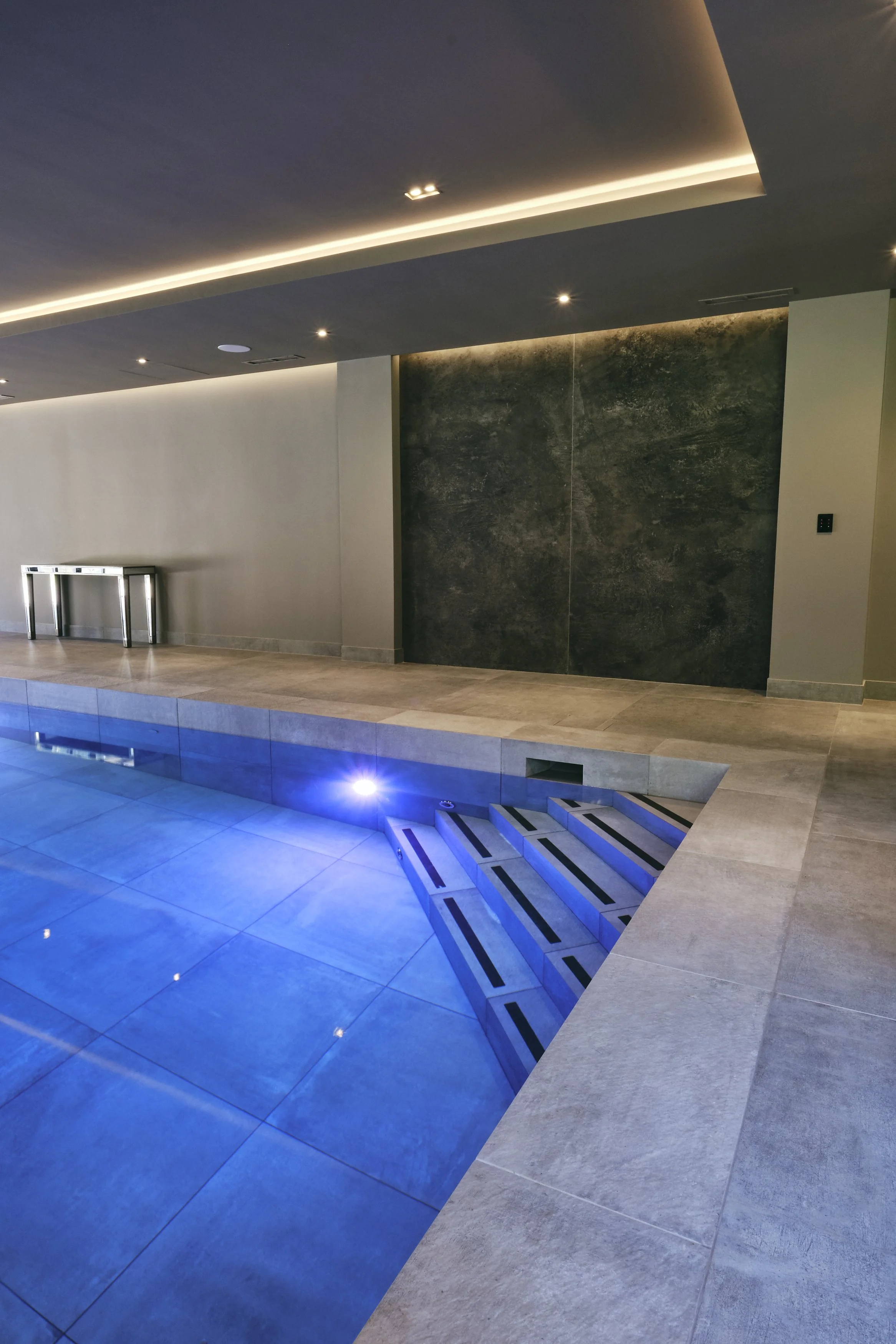
Urban Still, Alderley Edge
Urban Still was a full refurbishment of an existing 8x4 metre indoor pool as part of a wider property renovation in Alderley Edge. The project required the pool to be stripped back to its shell, re-rendered and waterproofed. New pipework, lighting and plant were installed throughout. An in-floor automatic cover system and a new Heatstar air management system were fitted as part of the upgrade.
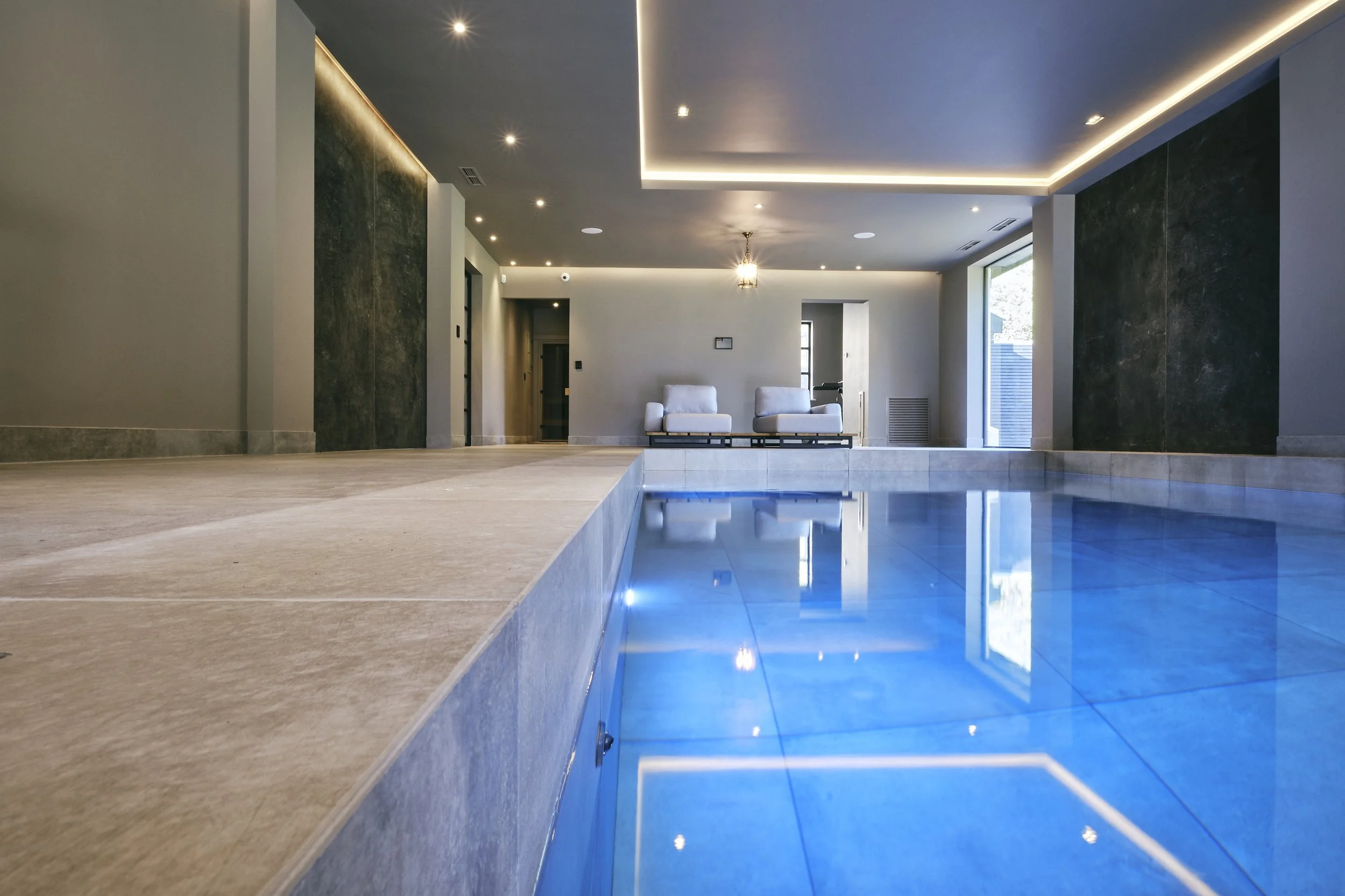
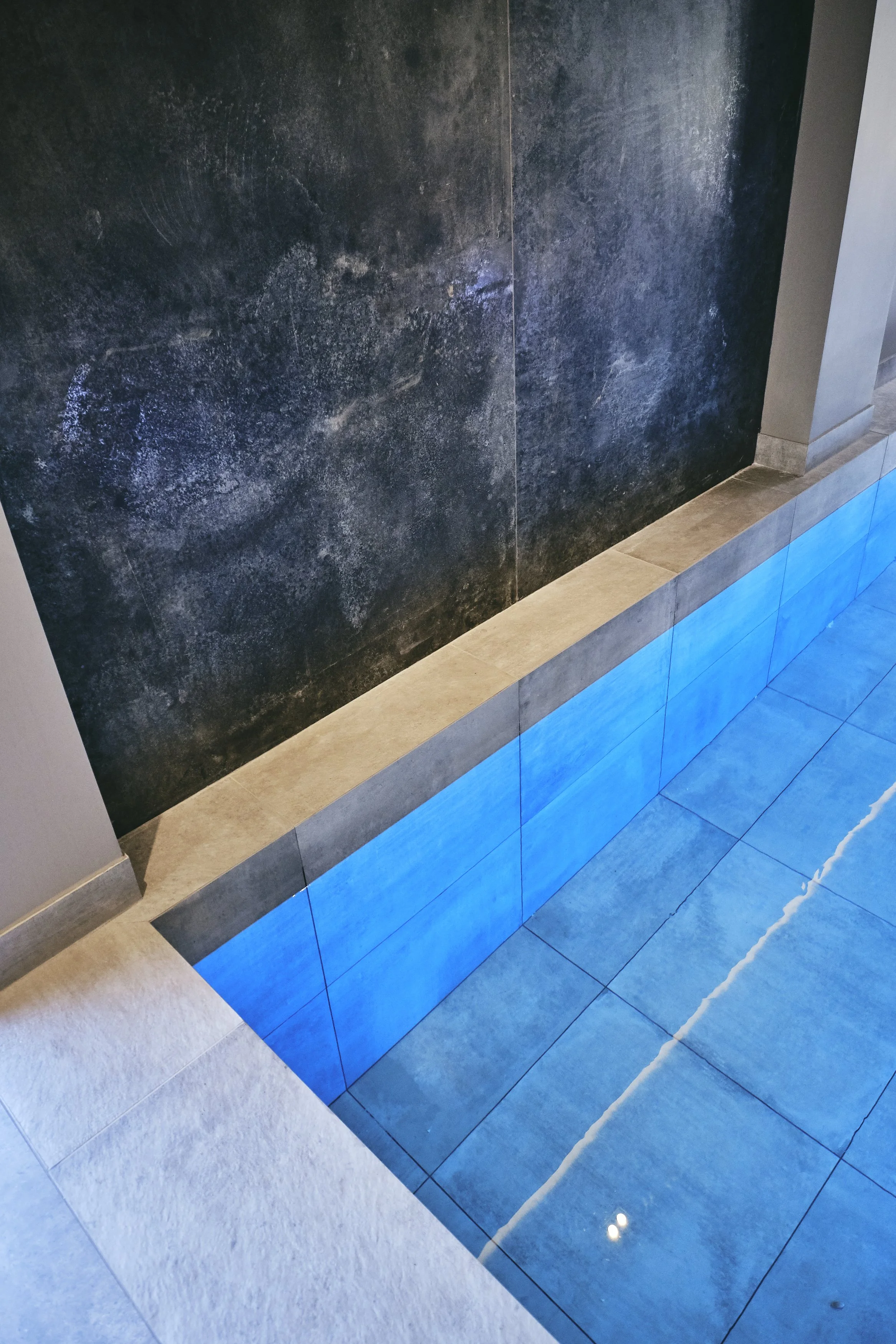
The pool was finished with 800x800mm tiles installed seamlessly into the surrounding floor area, a design finish that is becoming increasingly popular in high-end indoor pool projects. Precision installation of these large-format tiles required meticulous substrate preparation and alignment to achieve a flawless result.
The project was delivered alongside multiple trades within a live renovation programme. Coordination with other contractors and careful sequencing were essential to maintaining quality and programme. CSPAS continues to maintain the pool under an ongoing service agreement, demonstrating the importance of lifecycle support.
About us
CSPAS delivers high-end swimming pools and wellness facilities across Cheshire, Manchester and the wider North West, including Didsbury, Chorlton, Worsley, Prestwich, Hale, Bowdon and Altrincham.
Services include bespoke pools, one-piece pools, wellness suites, saunas, steam rooms, plant design, refurbishment and long-term maintenance.
CSPAS operates with an engineering-led approach supported by early design involvement, collaborative working and a commitment to durability and performance.
“When we get involved early, we remove risk, improve accuracy and deliver a pool that performs for decades. Good engineering underpins every project we take on.”
Chris Jenkins, Managing Director, CSPAS
FAQs
How much does a bespoke indoor swimming pool cost?
Costs vary depending on size, structural requirements, finishes, plant specification and environmental control systems. Indoor pools typically require higher structural and ventilation investment than outdoor installations. Early feasibility discussions with a specialist provide realistic budget guidance.
Do indoor swimming pools need planning permission?
If the pool is within an existing building footprint, planning permission may not be required. Where a new structure or extension is needed to house the pool, consent is likely necessary. Building Regulations approval is required in most cases. Always confirm with local planning authorities.
How long does it take to install a bespoke indoor pool?
Programme duration depends on build complexity, structural conditions and integration with the wider construction programme. Bespoke concrete pools may take several months from shell construction to commissioning. Early engagement and clear coordination reduce programme risk.
What ventilation does an indoor pool require?
Indoor pools require engineered air management systems to control humidity, prevent condensation damage and maintain comfortable conditions. Dehumidification, fresh air supply and heat recovery are standard requirements for any enclosed pool environment.
Can wellness features be added to an indoor pool?
Yes. Hydrotherapy jets, experience showers, saunas, steam rooms and spa pools can all be integrated into the design. These features must be planned during initial design stages as they affect plant sizing, power demand and spatial planning.
