
Luxury swimming pool installation for high-end homes

What luxury swimming pool installation involves
Luxury is not defined by size, surface finish or brochure imagery. It is defined by how well the pool is engineered into the building and the site, how quietly and efficiently it operates in use, and how predictably it performs over its lifespan.
A high-end installation touches multiple disciplines. Structural engineering, waterproofing, mechanical and electrical services, environmental control, interior finishes and landscape architecture all need to work as a coordinated package.
Decisions taken at concept and technical design stage determine whether those disciplines pull in the same direction or fight each other later in the programme.
On high-value residential projects, indoor pools dictate floor build-ups, ceiling heights, glazing specifications and air handling strategy. Outdoor pools drive landscape levels, drainage design and access routes. And getting these inputs in front of the design team early is the single most valuable thing a pool specialist can do.
Why early specialist involvement matters
Late appointment of the pool specialist is the most common source of avoidable remedial costs and compromise on luxury pool projects.
Decisions taken at RIBA Stage 2 or 3, including structural allowances, plant room location, service routes and ceiling voids, are difficult and expensive to reverse once the design moves into technical stage.
Bringing a specialist in at concept stage protects design intent, programme and budget. It gives the architect realistic parameters, allows the structural engineer to size the frame for pool loads, and prevents the plant room being squeezed into a cupboard at the end of the project. Early input also flags feasibility issues on constrained sites before they become planning problems. The same principle applies on major refurbishments.
For more detail, see our page on bespoke swimming pool design
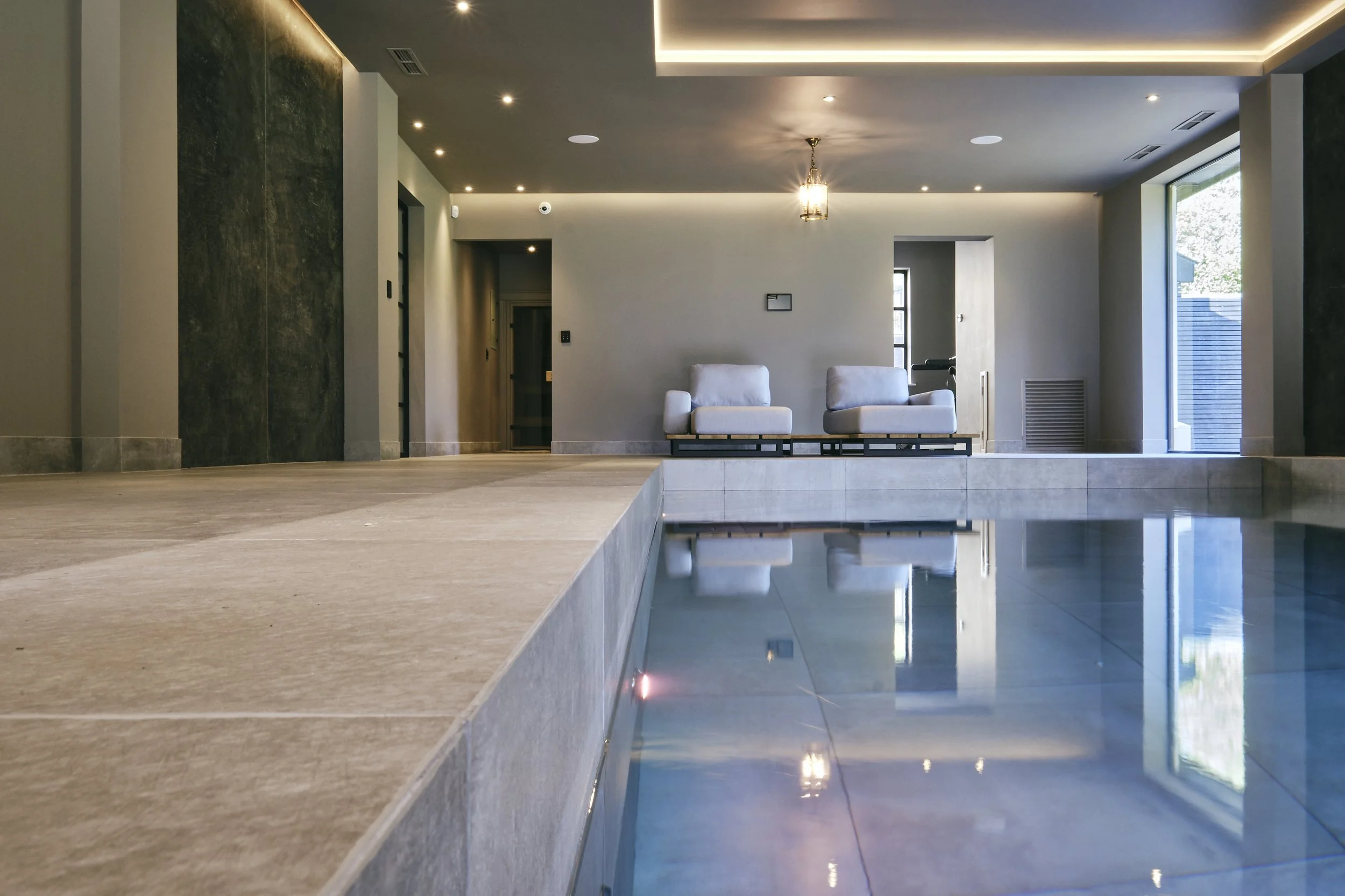
Core elements of a high-end pool installation

Structural design and waterproofing
The pool tank is the foundation of every luxury installation. Reinforced concrete construction, correctly detailed movement joints and a coherent tanking strategy are essential, particularly for indoor pools, basement pools and pools integrated beneath or adjacent to the main structure.
Waterproofing should be treated as a system, not a product. Failures are the most common long-term defect on luxury pools, and they are almost always traceable to design-stage compromises at the interface between the tank, the substructure and the building envelope. Remediation on a completed pool can run into six figures.
Plant, filtration and water treatment
Plant room sizing, location and access dictate how well the pool operates in service. The plant room should be sized for the pool volume, the filtration strategy and the likely maintenance regime, with adequate space for future upgrades. Undersized or poorly located plant rooms create problems from day one.
Filtration choices, typically sand, glass media or regenerative systems, should be matched to the pool volume and usage profile. On high-end residential projects, low-chlorine treatment using UV or ozone alongside reduced chemical dosing is increasingly specified for better water quality and reduced off-gassing indoors.
Environmental control for indoor pools
Indoor pools fail when environmental control is treated as an afterthought. Humidity management, dew point control and condensation risk must be addressed at design stage and coordinated with the building fabric, glazing specification and mechanical services. The cost of getting it wrong shows up for years in the form of corroded fixings, failed finishes and compromised building fabric.
Air handling capacity, fresh air rates and heat recovery should be designed around the pool surface area, water temperature and expected occupancy. Building Regulations Part F (ventilation) and Part L (conservation of fuel and power) both apply and both interact with the pool specification.
Finishes and aesthetic integration
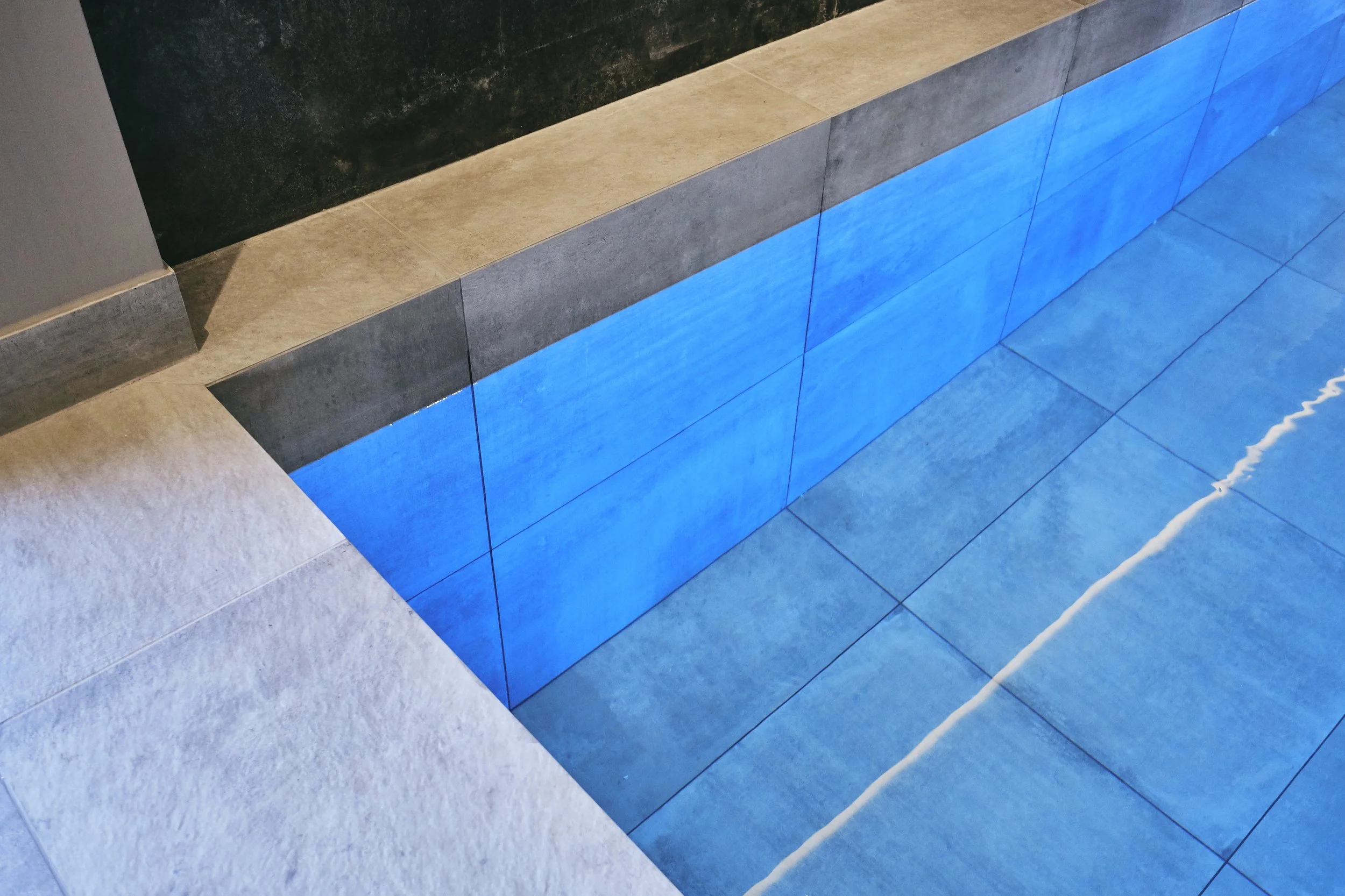
Tile selection, coping details and deck materials are where the pool meets the architecture. Large-format porcelain, glass mosaic and natural stone finishes all demand precise substrate preparation and tight tolerances from the tank construction. A finish is only as good as the substrate underneath it.
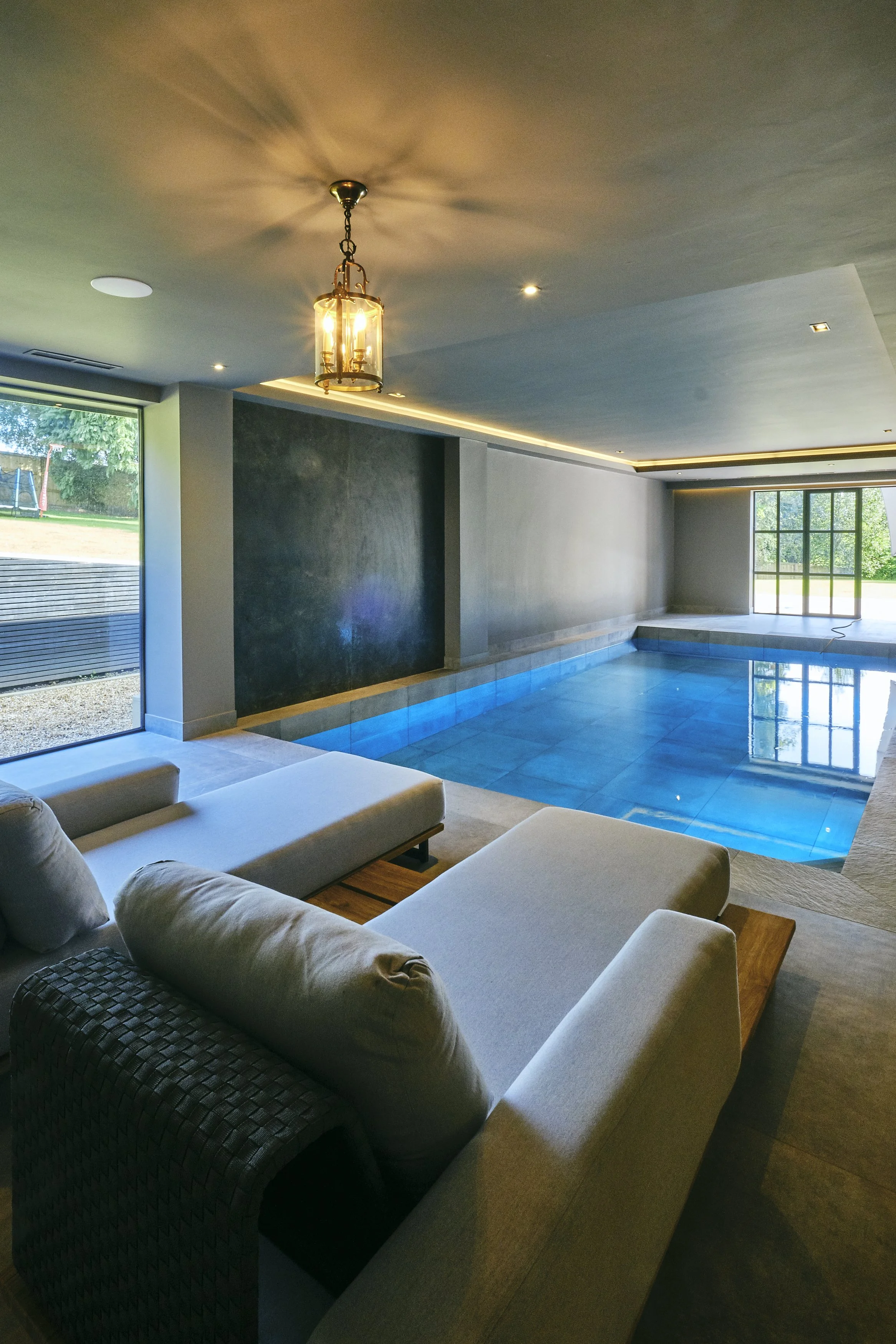
Sightlines, lighting transitions and material continuity into the surrounding space should be coordinated with the interior designer from early design stage. On high-end projects the pool is a central, visible element of the property and finish quality is scrutinised accordingly.
Luxury swimming pool installation for high-end homes is an engineering exercise as much as an architectural one. A luxury pool is rarely a standalone leisure feature. It is an integrated part of the architecture, the landscape and the wider building services strategy, and the quality of the installation is judged over decades, not on handover day.
For homeowners, architects and project managers working on luxury residential schemes, the defining questions are about structural integration, waterproofing strategy, plant specification, environmental control and long-term serviceability, not tile colour or pool shape.
Here at CSPAS, we explain what a luxury pool installation actually involves and what to out for during specification and construction.

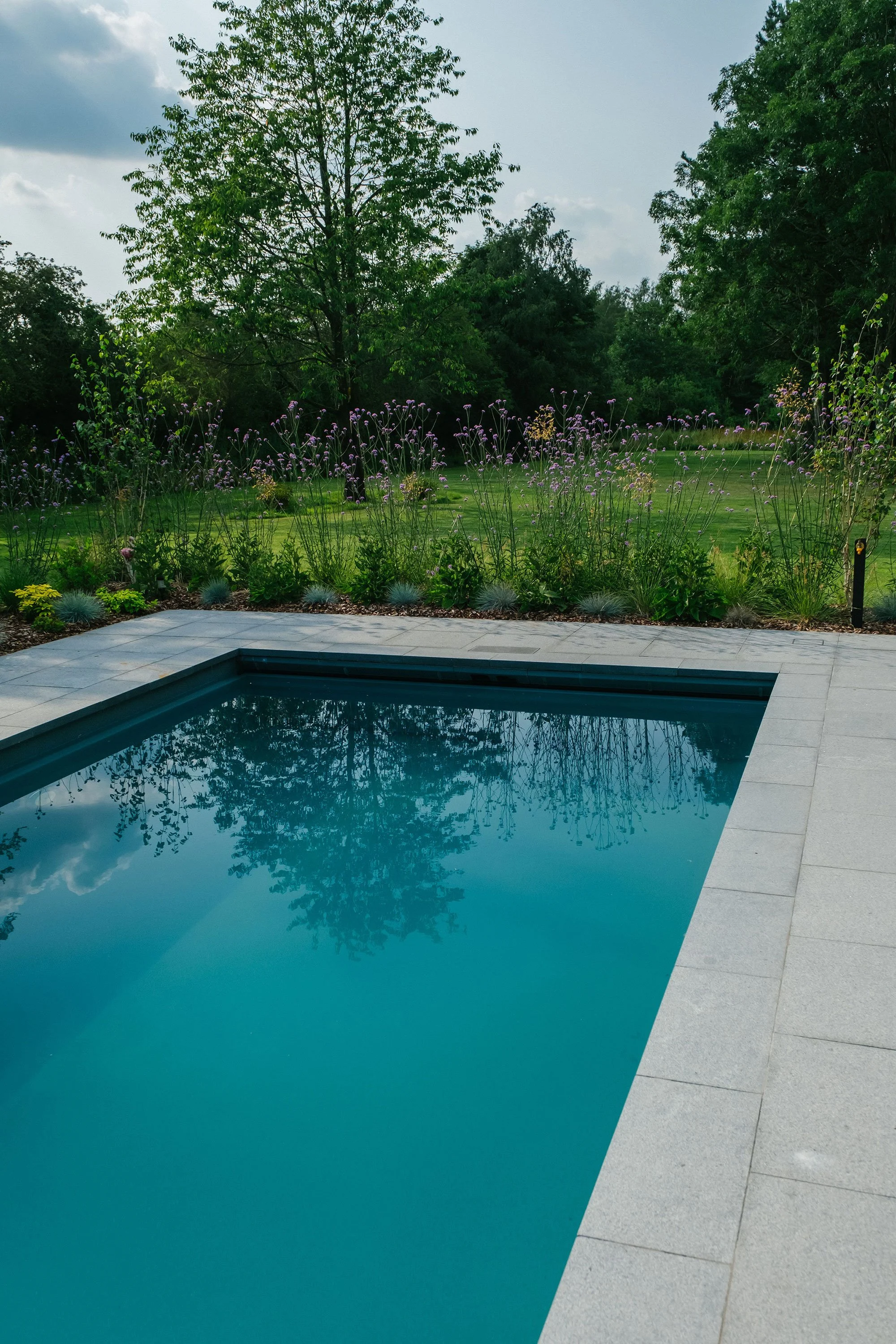

Integrating wellness features
Demand for wellness suites in high-end homes has grown significantly. Saunas, steam rooms, experience showers, cold plunge pools and hydrotherapy features are increasingly specified alongside the main pool as part of a coherent wellness brief rather than as bolt-on additions.
Integrating these features properly requires coordinated design of drainage, ventilation, plant, power and interior finishes. A single specialist handling the full wellness suite removes interface risk between trades.
Site and project considerations on luxury homes
High-value residential plots often come with constraints that significantly affect pool installation. Sloping sites, narrow access lanes, listed status, conservation area designations and sensitive neighbouring boundaries all need to be factored in at feasibility stage.
Lift planning is a regular requirement for one-piece pool installations. Recent projects have involved road closures, 60-tonne cranes and mobile gantries to manoeuvre pools into position on restricted sites. Detailed logistics planning is part of the specification, not an optional extra.
Realistic timelines for a luxury pool project typically run 6 to 12 months from concept to handover. Indoor pools and structurally complex schemes take longer. Pool works commonly sit on the critical path, so errors in sequencing affect every follow-on trade.

Planning permission and compliance
Outdoor pools often fall within permitted development rights on existing homes, but pool halls, indoor extensions, listed properties and sites in conservation areas typically require planning consent. Early conversations with the local authority are sensible on any project with a significant built element.
Building Regulations compliance covers Part L (conservation of fuel and power), Part F (ventilation), Part P (electrical safety) and, where relevant, Part B (fire safety) for pool halls and plant rooms. Pool safety standards, barrier requirements around outdoor pools and insurance implications all need to be considered alongside the regulatory position.
Why choose a specialist for luxury swimming pool installation in Cheshire
About CSPAS
With over two decades of experience, CSPAS has delivered luxury swimming pool installations across Cheshire, Manchester and the wider North West. Projects range from new-build luxury homes and major architectural refurbishments to full wellness suite installations for high-net-worth clients.
As an award-winning, family-run business, CSPAS is trusted by architects, landscape designers, developers and homeowners for both bespoke concrete pools and premium RivieraPool one-piece installations.
Our team provides full plant and filtration design, specialist environmental control for indoor pools, and complete wellness solutions including saunas, steam rooms and hydrotherapy features. CSPAS also delivers comprehensive refurbishment and maintenance services for existing pools requiring modern upgrades or technical improvements.
Chris Jenkins, Managing Director of CSPAS, comments;
“Our role on a luxury project is to bring engineering discipline to the design process from the start. A well-designed pool is an engineered system that has to perform reliably for decades, not a decorative finish.
We focus on getting the technical details right, coordinating with every discipline on the project, and delivering installations that enhance the property for the long term.”
