
Swimming pool specifications: a guide for specifiers and developers

Pool size, depth and layout
Pool dimensions should be driven by use. A typical residential pool sits between 8m x 4m and 12m x 5m. A dedicated lap pool will usually be at least 15m long and a minimum of 2m wide per lane. Commercial training and competition pools follow Sport England and FINA guidance, with 25m and 50m as standard reference lengths.
Depth profiles affect structural design, water volume, heating load and safety. A constant depth of 1.2m to 1.4m suits most leisure use. Stepped or graded floors allow for shallow play areas and deeper diving zones, but increase complexity and cost.
Setting out should account for site access, ground conditions, ceiling height for indoor pools (a minimum of 2.6m above water level is generally recommended), and coordination with foundations and basement waterproofing where relevant.
Structural construction options
Three main structural systems are used on UK projects.
Reinforced concrete shells offer the most flexibility on shape, depth and finish, and are the standard choice for high-specification residential and commercial pools. They suit tiled finishes, infinity edges, raised pools and movable floors.
Steel or polymer panel systems use prefabricated walls fixed to a concrete base slab. They are faster to install than poured concrete and well suited to liner finishes.
Liner pools use a welded PVC membrane stretched over the structure. They are cost-effective and quick to install but have a shorter lifespan than tiled finishes and offer less design flexibility.
The structural choice affects the tanking, waterproofing strategy and tolerance for movement in the surrounding building. On indoor pools, coordination with the basement waterproofing system is critical.
Heating and energy specifications

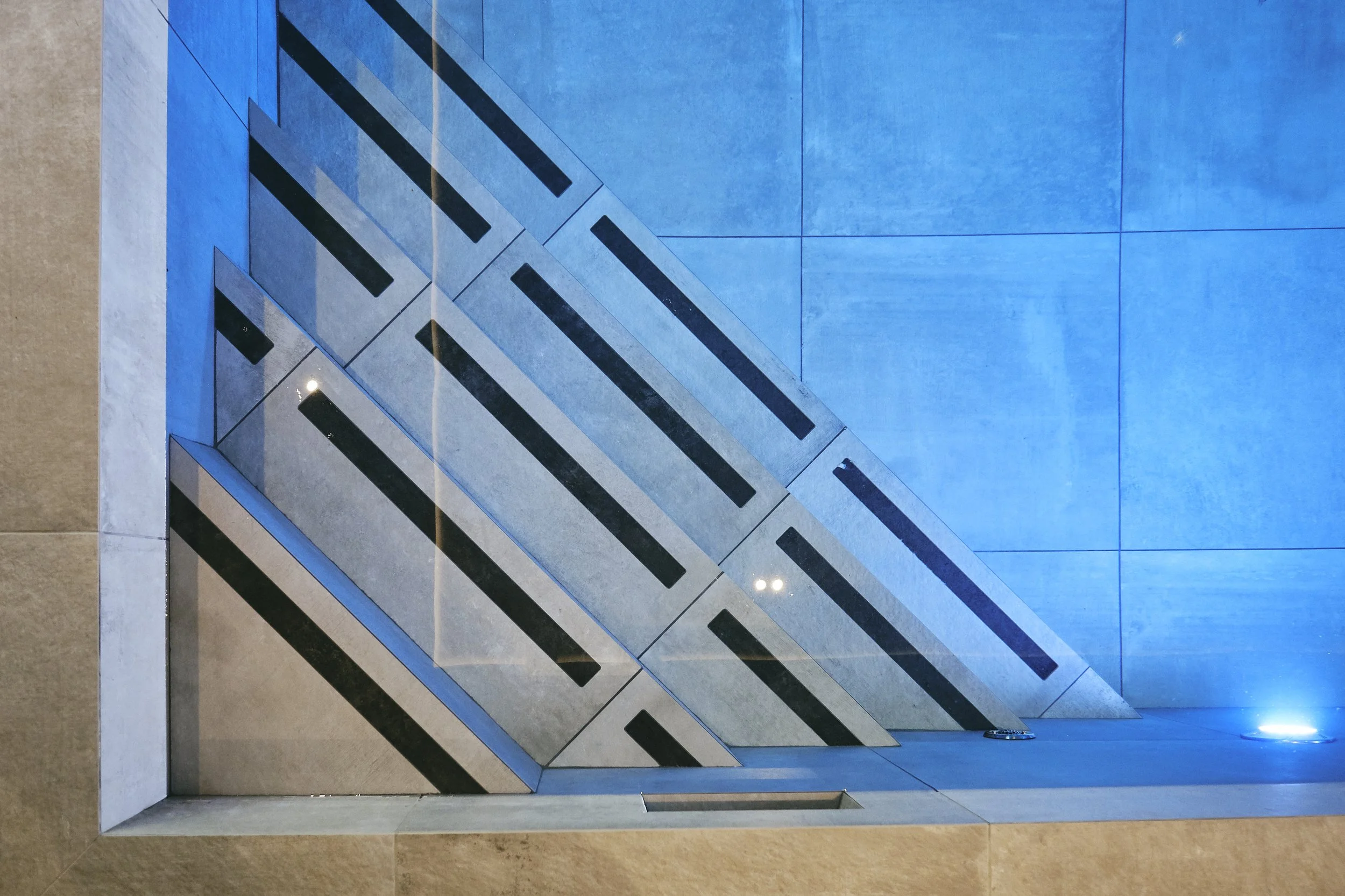
Heating specification has moved significantly toward heat pumps. Air source heat pumps now provide the primary heat source on the majority of new private pools, with gas or electric boilers retained on larger or commercial projects, or as a backup.
Heat pump sizing depends on pool volume, surface area, indoor or outdoor location, target water temperature and the local climate. As a rough guide, indoor private pools usually require between 15kW and 30kW of heating capacity. Oversizing reduces run time and improves recovery after backwash.
Pool covers are essential, not optional. An insulated cover reduces heat loss and evaporation by 50 to 70 percent. For outdoor pools, an automatic slatted cover with thermal slats delivers the best year-round performance.
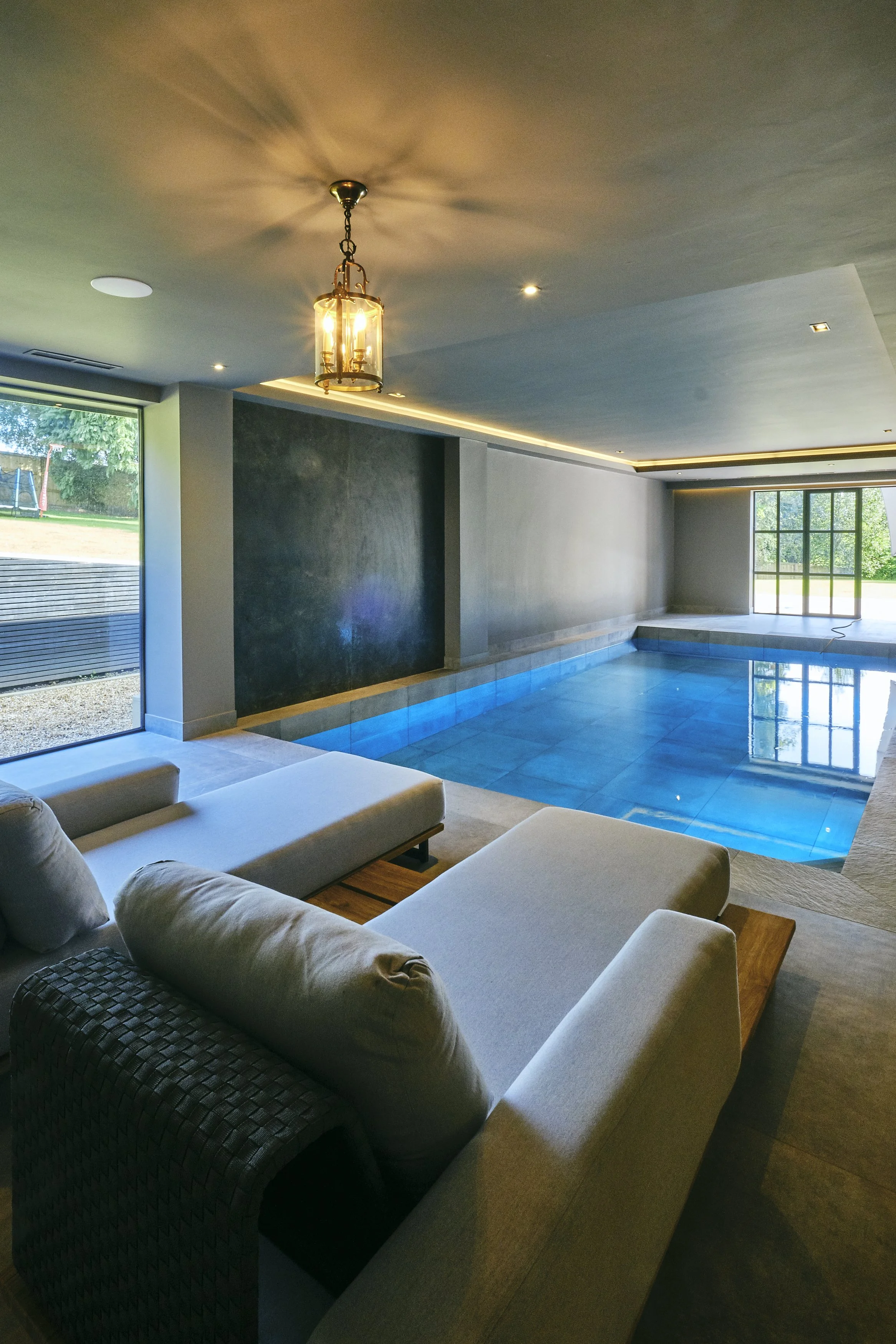
Building Regulations Part L applies to indoor pool halls. Insulation, controlled ventilation and heat recovery are required to manage humidity and energy use. A specialist pool ventilation unit with humidity control and air-to-air heat recovery is the standard solution.
Plant room requirements
Plant rooms are routinely undersized in early design stages. For a typical residential pool, allow a minimum of 15 to 20 square metres with a ceiling height of at least 2.4m. Commercial pools require considerably more.
The plant room should sit close to the pool to minimise pipe runs and heat loss, with floor drainage, controlled ventilation, mains water and a dedicated electrical supply. Access for filter media changes, heat pump servicing and equipment replacement must be designed in from the outset, not retrofitted.
CSPAS designs and builds private and commercial swimming pools across the UK. We work with architects, developers, main contractors and private clients from concept through to handover.
Here, we set out the key swimming pool specifications that need to be agreed early in a project, why each one matters, and the practical implications for design, plant and compliance.
A swimming pool is a structural, mechanical, electrical and chemical system housed in a building or landscape. Getting the specifications right at the design stage avoids cost, programme and performance issues later.

Lighting, finishes and surround
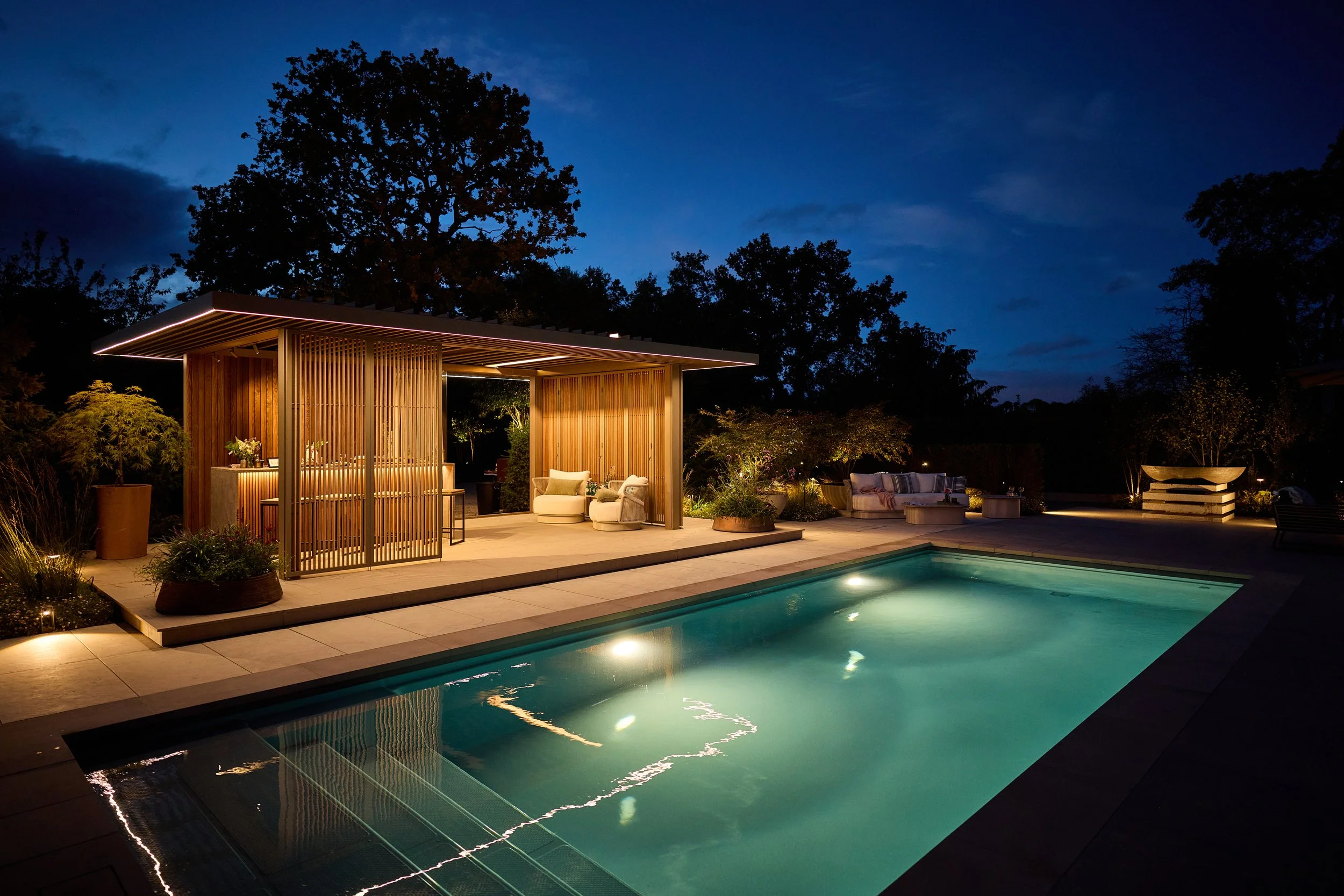
Underwater lighting should be LED, low-voltage, and rated to IP68. All metallic components within the pool zone require equipotential bonding under BS 7671.
Finishes range from porcelain and glass mosaic tiles to all-tile fully grouted finishes, liner systems and polished concrete. Tile is the longest-lasting and most specifiable option for high-end projects. The Circle is one example of how finish, lighting and structural geometry can be coordinated to create a single, considered space.
Surrounds need to be slip resistant when wet (PTV of 36 or above is the recognised threshold) and detailed to manage splash water and drainage. Coping stones should be specified for thermal performance and edge profile in equal measure.
Project example:
The Hideaway

The Hideaway is a CSPAS project that illustrates how structural choice, finish, heating and plant specification combine to deliver a usable, efficient pool integrated into the wider building and landscape design.
Working with CSPAS from concept to commissioning
The most common cause of cost overruns and performance issues on swimming pool projects is late engagement. Pool specifications affect basement depths, floor build-ups, structural loading, M&E provisions, ventilation strategy and architectural detailing. Adding a pool specialist at planning stage avoids rework and protects the project programme.
CSPAS works alongside architects, M&E consultants and main contractors from initial feasibility through detailed design, installation and commissioning. We provide specification support, technical drawings and equipment schedules suitable for inclusion in tender documents.
