
The best type of swimming pool for a large garden
Why a large garden changes the decision
In a smaller plot, the pool size and position are dictated by what the space allows. A large garden removes most of those limits. You can choose a generous swimming length, position the pool to catch the sun, leave room for terracing, planting and a separate seating or bar area, and still keep the rest of the garden intact.
That freedom shifts the priorities. The decisions that matter most become construction method, finish, running costs and how well the pool integrates with the surrounding landscape. The four main pool types each handle those priorities differently.
One-piece pools
A one-piece pool is manufactured off site as a single composite shell, then craned into a prepared excavation. CSPAS is the UK distributor for RivieraPool, and one-piece models are well suited to large gardens for a few practical reasons.
The shell arrives finished, so the surface quality, colour and built-in features such as steps and benches are controlled in the factory rather than formed on site. Installation is quicker than a built pool because the main structure is delivered complete. Craning the pool into position is one of the key advantages, provided there is access for the lift.
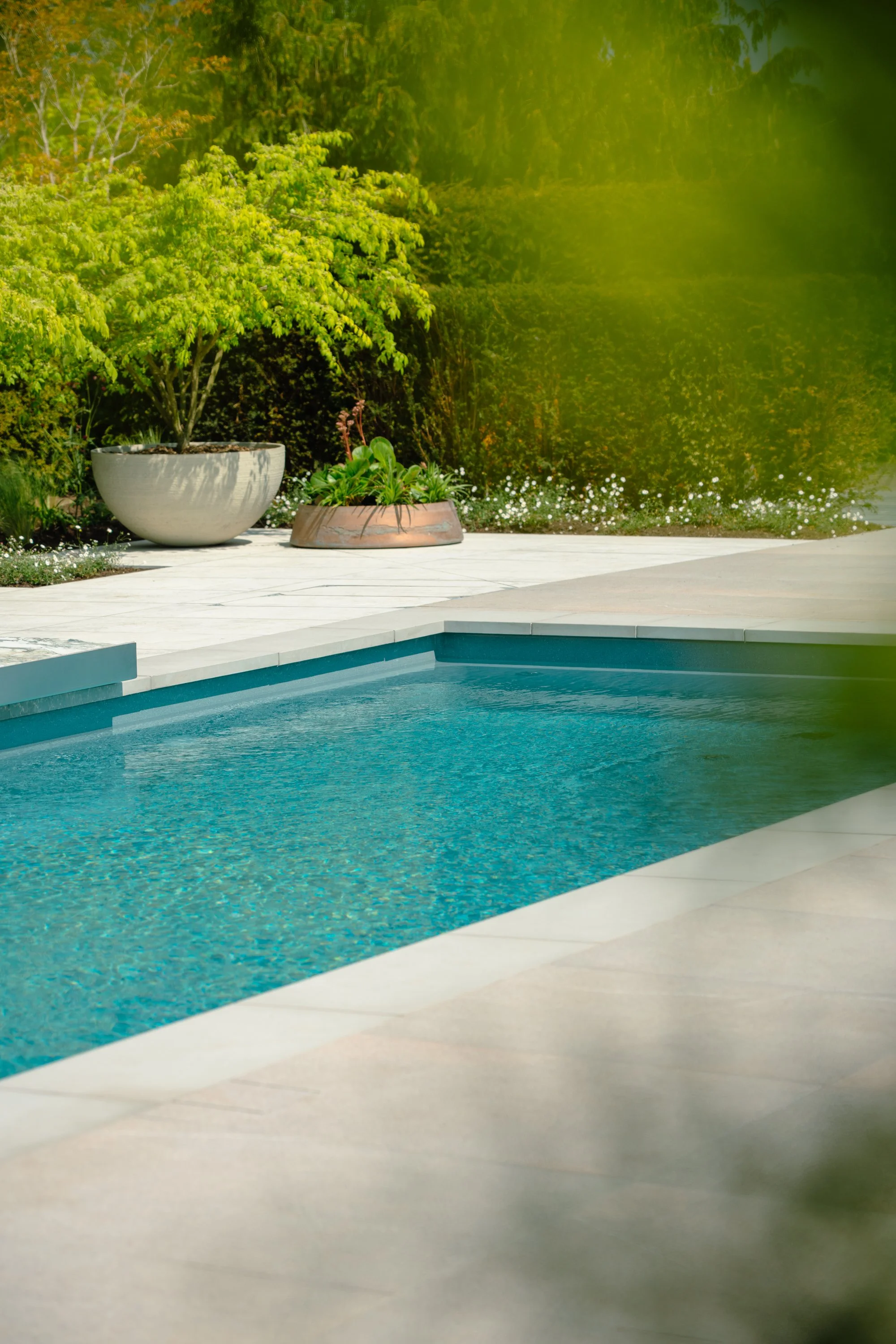
One-piece pools come in a wide range of sizes and layouts, from compact designs to larger formats above nine metres in length, which gives a proper swimming distance for an adult. You can see a RivieraPool one-piece pool in a landscaped setting at the CSPAS Show Pool, which is a 9.75m by 3.7m model with a full-width step section. Seeing the size and finish in person is the clearest way to judge whether the format works for your garden.
The main consideration is access. The shell is delivered in one piece, so there has to be a route for the crane and the delivery vehicle. In most large gardens this is manageable, but it needs checking early.
Bespoke concrete pools
A concrete pool is built in position, usually reinforced and then finished with tile, render or a liner. This is the route to take when the design is the priority and you want something that no off-site shell can match.
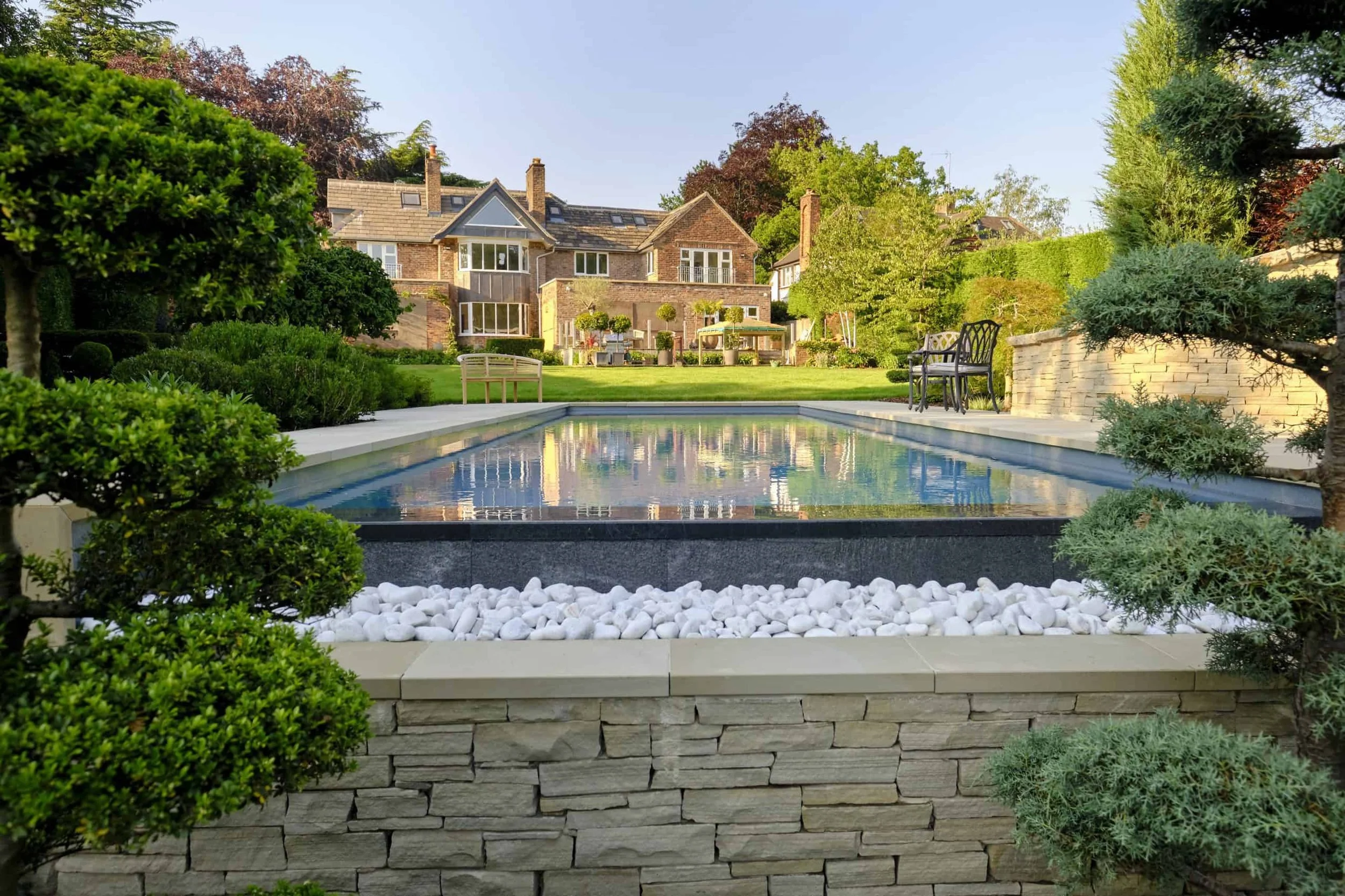
Concrete gives full freedom over shape, depth and edge detail. Infinity or vanishing edges, raised spa sections, unusual geometries and very large or deep pools are all achievable. In a large garden with a slope or a view, a vanishing edge can make the most of the setting.
The trade-offs are time and cost. A built pool takes longer to construct than a one-piece installation and involves more on-site trades, so the programme and budget are higher. The finish also depends on the quality of the workmanship, which makes the choice of installer more important.

Matching the pool to the garden
The pool type is only part of the decision. How the pool sits in the garden determines whether the finished result works.
Proportion and position
A pool that is too small looks lost in a large garden, and one placed without thought to sightlines and sun can feel disconnected. Position the pool to catch the sun through the day, relate it to the house and main seating areas, and size it so it holds its own in the space. Orientation also affects water temperature, as an open, south-facing position gains more passive heat.
Access for installation
Every pool type involves groundworks, excavation and the removal of spoil. A one-piece pool also needs crane and delivery access for the shell. Restricted access does not rule a pool out, but it changes the method and the cost, so it should be assessed at the design stage.
Heating, covers and running costs
In the UK climate, heating and covering a pool make the difference between a feature used for a few weeks and one used across the season. An air source heat pump is an efficient way to maintain temperature. An automatic cover reduces heat loss and evaporation, keeps debris out, and on darker covers can add passive solar gain. Specifying heating and a cover from the start is more cost-effective than adding them later.
Planning and building considerations
A domestic outdoor pool is often within permitted development, but this is not guaranteed. Listed buildings, conservation areas, very large structures and any associated pool house or enclosure can require planning permission. Confirm the position before work begins rather than assuming it is exempt.
At CSPAS we design and install swimming pools across Cheshire and the wider UK, from compact one-piece models through to large bespoke builds. A large garden gives you the space to do almost anything, which is exactly why the decision needs more thought rather than less.
With room to spare, the question is no longer whether a pool will fit, but which type of pool suits how you want to use the space, the look you are after, and the budget and groundworks involved.
Here we discuss the main pool types and how to match one to a large garden.
Choosing the right pool for your garden
There is no single best pool for every large garden. A one-piece pool suits owners who want a controlled finish and a faster install. A bespoke concrete pool suits a design-led project where shape and edge detail matter most. Vinyl liner and natural pools each have their place depending on budget and the look you want.
The right choice comes from matching the pool type to how you will use it, the character of the garden and the long-term running costs. CSPAS works through that process from concept to completion. To talk through the options for your garden, get in touch with the CSPAS team.
A large-garden project in practice

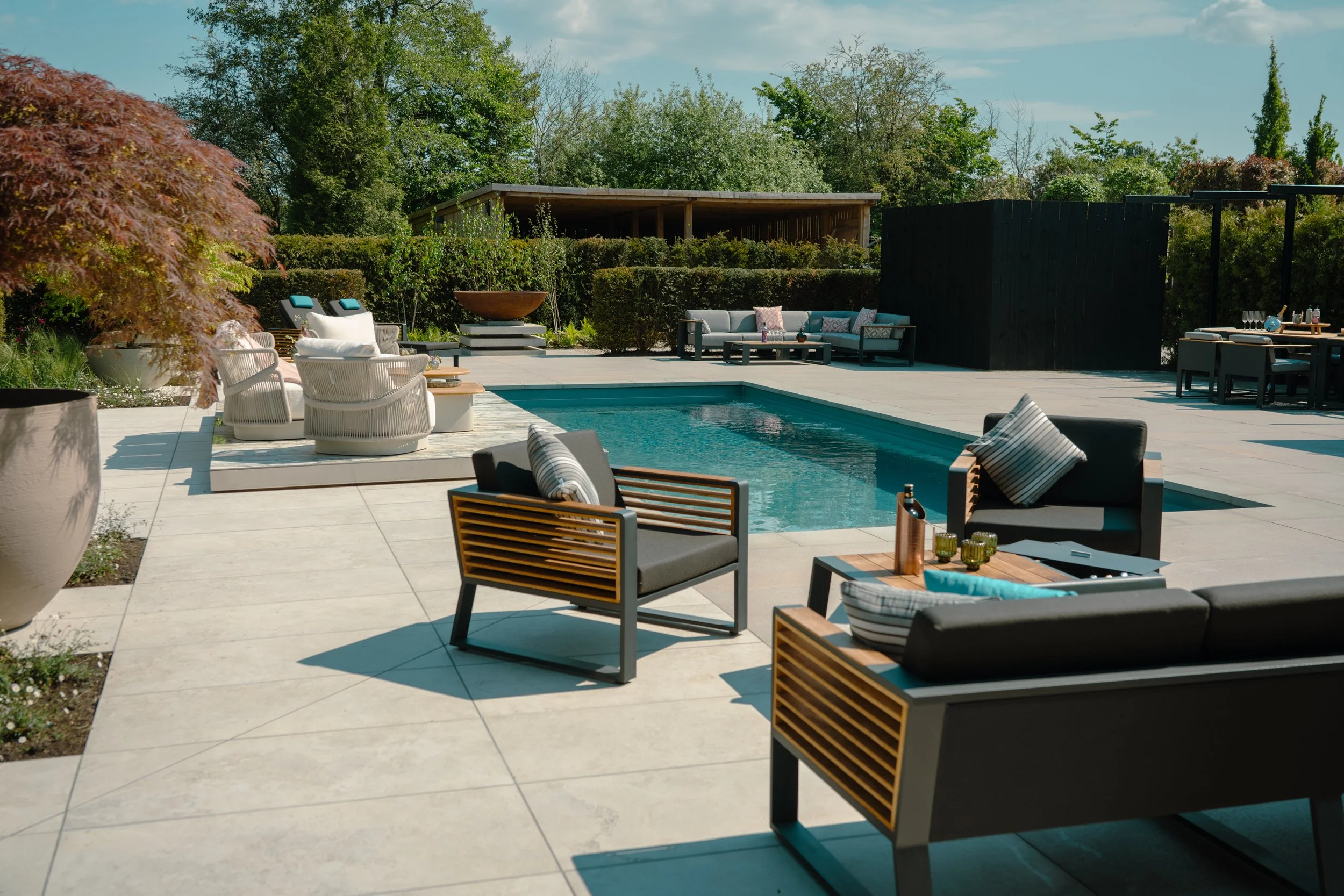
The Hideaway project shows how these decisions come together. It features a RivieraPool Ancona model at ten metres in length, set within landscaping designed to create a garden within a garden, with a private feel and an adjacent bar area.
The pool was specified with an efficient package rather than just a shell. It uses a polycarbonate automatic cover stored in a hidden pit, which adds safety, keeps debris out and contributes passive solar heat gain. An advanced filtration system keeps chlorine demand low, and a Zodiac air source heat pump handles heating efficiently.
The result shows what a large garden allows when the pool, the landscaping and the supporting equipment are planned together.
About CSPAS
With over two decades of hands-on experience, CSPAS has worked on a broad range of luxury residential projects, including new builds, major refurbishments and full wellness suite installations.
As an award-winning, family-run business, CSPAS is trusted by architects, landscape designers, developers and high-net-worth homeowners for both bespoke concrete pools and premium RivieraPool one-piece installations.
The team provides full plant and filtration design, specialist environmental control for indoor pools and complete wellness solutions including saunas, steam rooms and hydrotherapy features. CSPAS also delivers comprehensive refurbishment and maintenance services for existing pools requiring modern upgrades or technical improvements.
Chris Jenkins, Managing Director of CSPAS, comments;
“Large gardens give us real design freedom, but an outdoor pool still has to be engineered to perform. When we are involved early, we can coordinate with the architect and landscape designer, remove risk from the programme and deliver a pool that looks right from day one and still performs decades later. That is what makes the difference on high-value projects.”

FAQs
What size pool is best for a large garden?
There is no fixed answer, but a swimming length of around nine metres or more gives a proper swim for an adult. The pool should also be sized in proportion to the garden so it does not look lost. Position and surrounding landscaping matter as much as the dimensions.
Is a one-piece or concrete pool better for a large garden?
Both work well. A one-piece pool offers a controlled factory finish and a faster installation, provided there is crane access. A concrete pool offers full design freedom for shapes, depths and features such as infinity edges, but takes longer to build and costs more.
Do I need planning permission for a swimming pool in a large garden?
A domestic outdoor pool is often within permitted development, but this is not guaranteed. Listed buildings, conservation areas, larger structures and any pool house or enclosure can require permission. Confirm the position before starting work.
How can I reduce the running costs of a large garden pool?
An air source heat pump for heating and an automatic cover to limit heat loss and evaporation are the two most effective measures. Specifying both from the outset is more cost-effective than retrofitting them later.